


Legacy modernization for mid-sized companies
Your legacy system runs. And nobody knows exactly how anymore.
Before anyone decides on a rewrite, we show what your system actually does today. We read its behavior from the code or straight from the running system and turn it into a complete specification with test cases. Only then do we talk about migration and a fixed price.
- Works without source code
- Equivalence tested, not claimed
- Fixed price after the analysis
- IP and source code belong to you

From our projects
Four situations customers bring to us.
A legacy system becomes a risk long before the first outage, namely as soon as the knowledge about it disappears while the business still depends on it.
- Vendor gone · retirement
The knowledge leaves, with the vendor or into retirement
The supplier was acquired or no longer exists. Or the one person who has maintained the system for years is retiring. In both cases the application keeps running, but nobody can explain it anymore.
- .exe · .dll · .appx
The source code is missing or unreadable
All that exists is the compiled application. Or code nobody has wanted to touch for years.
- Windows Server 2008 · VB6 · Java 6
The system runs on technology nobody maintains anymore
The vendor no longer ships security updates, new hardware and new software no longer fit. The server is rebooted at night so it is still running in the morning.
- Quote received · shelved
Quotes for a rewrite were too expensive
You asked for quotes. The total bore no relation to the expected benefit, so everything stayed as it was. The risk has not grown smaller since, only older.
Most modernization projects fail early, because nobody knew precisely what the old system did before the decision was made.
Your path with Riwers
Five stages, each decided on its own.
You never commit to more than the previous stage has proven. Each stage has its own result, and that result stays yours even if you stop afterwards.
- Stage 0Feasibility check
Ten questions, five minutes, on your own at the screen
You answer ten questions on source code, test system, database and scope. At the end you know which of the three preconditions are already in place and which are still missing.
Your effort: ten questions, no preparation
You keep: your assessment once you confirm your email address, and the report as a PDF
Then you decide: Conversation, yes or no
Free5 minutes - Stage 1Risk conversation
30 minutes on your check result
You bring your result from the feasibility check. We go through the open preconditions and tell you which system needs attention first and which can wait.
Your effort: 30 minutes, ideally with the person responsible for your IT
You keep: an honest assessment, regardless of whether it turns into a project.
Then you decide: Commission the analysis, yes or no
Free30 minutesNo obligation. - Stage 2Modernization analysis
A report your management understands too
We review code or running system, interfaces, data, integrations and operating costs. You receive the current state, a migration path per module, the limits of observation and a binding fixed-price offer for the implementation. Then you decide with numbers.
Your effort: Source code or an operable test system and one contact person on your side
You keep: analysis report plus fixed price. The report is yours, even if you build with someone else.
Then you decide: Build, with us or with another partner
Freeup to one weekDuring the introduction phase until 31.12.2026.Under NDA, in an isolated environment.Regularly priced afterwards, credited when stage 3 is commissioned. - Stage 3Legacy replacementCore service
Fixed-price sprint, critical modules first
We rebuild the analyzed system module by module, critical parts first. The old system keeps running in parallel until the tests for a module pass. Only then does the new one take over. Documentation and knowledge transfer to your team are part of the scope.
Your effort: Acceptance per module, parallel operation until the tests pass
You keep: maintainable code that belongs to you entirely, including IP and source code. You can continue with another partner at any time.
Then you decide: Operate it yourself or a retainer
Fixed priceSet after stage 2, for the scope from the analysis. No open-ended timesheets. - Stage 4Retainer
Maintenance and further development with guaranteed response time
After the replacement we take over updates, security patches, bug fixes and small extensions for a fixed monthly price. Your IT has one contact who knows the system.
Your effort: one contact person on your side
You keep: a system that no longer depends on a single person. That includes us.
Then you decide: Extend or cancel, month by month
from EUR/CHF 1,500 per monthmonthlyScope individual. Cancellable monthly from the second month.
Feasibility check · free · 10 questions
Can your system be reconstructed? And what decides the price?
Ten questions we ask in every first conversation. Three of them decide whether the modernization analysis can start, six determine the effort, the last one asks about date and budget.
Please check your inbox.
We have sent you an email. If you are new to us, please confirm the link in it, and your result opens straight away on our website. If you have confirmed your address with us before, your result comes to you by email right away.
No email? Check your spam folder, or correct your address.
The three preconditions
- Source code
- Test system
- Acceptance
What determines the effort
Effort profile:
Largest cost driver:
Caution: Undocumented core logic without source code is the one combination that spikes the risk. It needs an external reference to check against, for example a regulation or reference results.
From legacy projects
What this looks like in real projects.
Three legacy systems, three paths. What we found, what we did, and what the customer was left with.
- Löwenfels
A live portal through which associations file grant applications with a public authority: a ten-year-old jQuery frontend, business logic spread over 60 server-side RPC scripts, no tests, no specification. Riwers rebuilt the interface in Angular without touching the document system. Seven days of work instead of three to four months.
SoftwareRead the story - dormakaba
B-COMM connects time and access terminals to the customer's HCM or ERP, grown over 30 years, a Java RMI monolith with a Swing interface. No repository. What arrived was a notebook running the application. Riwers captured the behavior on the running system and replaced the interface with a React application, old and new running side by side.
Security technologyRead the story - Winoil
A 30-year-old ERP in Visual Basic, two parallel versions, Windows Server 2008, restarted every night. There was no source code, and the vendor, since acquired, no longer delivers anything. Riwers reconstructed the system from server snapshots without ever booting it and is introducing Odoo module by module. The first module is live. The old ERP keeps running alongside.
ChemicalsRead the story
How we work
The running system is the specification.
We observe what your application does, write it down and turn every observation into an automated test. The new system has to pass these tests before it takes over your operations.
Observe where others guess
Git history, decompilation, capturing the interfaces in operation. Where documentation is missing, the system itself becomes the source. That is why it works without source code too, with more effort and clearly stated limits.
Specification and tests before the first line of code
The observations become a behavioral specification with test cases. It is the blueprint and the acceptance criterion at the same time.
Module by module, operations keep running
For each module we decide together with you whether it is rebuilt, absorbed into standard software, or retired. A pilot module goes live first and proves the architecture. No big bang.
“We verified every API payload, every navigation flow, and every form interaction against the live legacy system before writing code.”
- 01Understand
Map architecture, business rules, dependencies and data flows.
- 02Analyze
Assess code, architecture, risk areas and maintenance load. This is where each module is assigned to rebuild, standard software or retirement.
- 03Specify
Complete behavioral specification including test cases. The basis for the fixed price.
- 04Rebuild
Modern stack, every change reviewed by senior engineers.
- 05Verify
Automated tests prove identical behavior. Check operations per step, reconcile data, then move on.
What we do not promise
Three things you will not hear from us.
- 01
A fixed price before the analysis
Anyone who quotes a price without looking at code and data is guessing. We derive our fixed price from the specification that stage 2 produces. Before that, we give you an order of magnitude.
- 02
Functional equivalence as a blank check
What we commit to, we have first recorded as tests on the old system. Where that recording reaches its limit is written in the analysis report. You know the limit before you sign.
- 03
A rewrite at any cost
On a current ERP engagement the right answer was to move into standard software with a clean data migration, complemented by a few additional modules. The application itself was never rebuilt. Sometimes “leave it alone” is the result of the analysis.
Who you will talk to
Who stands behind the result.
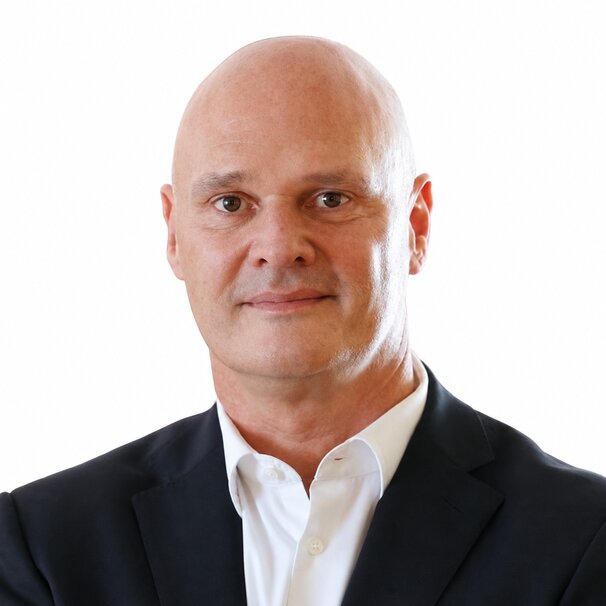 Olaf von der AheManaging Director Germany, your contact
Holds the risk conversation and remains your contact through to final acceptance. Over 15 years in IT management, more than ten of them with Riwers. He knows German SMEs as well as the way our development teams in Bratislava work.
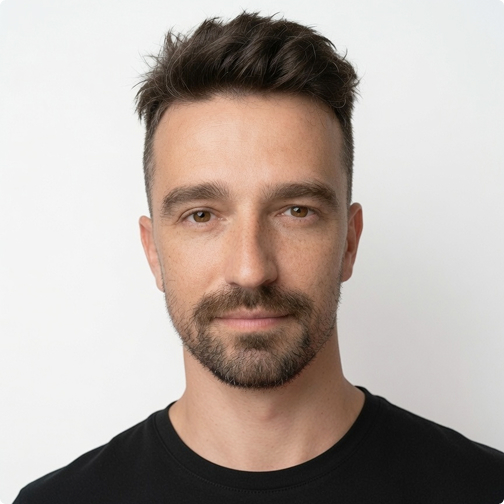 Alexander BenkoLegacy Migration Lead, Senior AI Software Engineer
Developed the method we use to reconstruct legacy systems from code, decompiled binaries, databases and runtime behavior. He assesses your system's feasibility and tells you when he does not see it. For technical questions, Olaf brings him in.
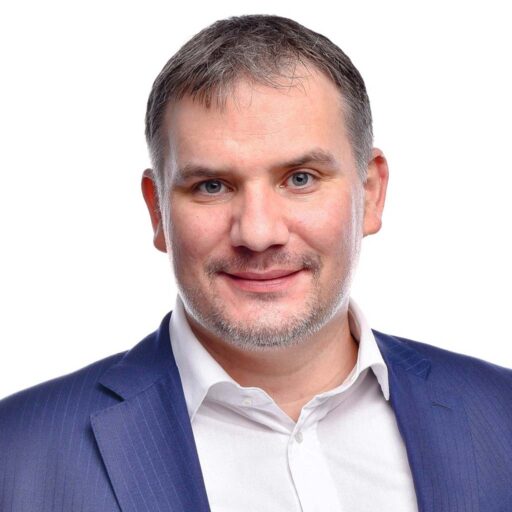 Marco DietrichCo-founder and Chief Operations Officer, Riwers AG
Former software developer, today COO and head of the innovation team at Riwers. He drives new topics, first and foremost AI, into the team and to customers. That we reconstruct legacy systems with AI support today goes back to this work.
Stage 1
Book your free risk conversation.
30 minutes with Olaf von der Ahe, Managing Director Germany. For technical questions he brings in Alexander Benko. With your result from the feasibility check we start right at the open points.
- Which preconditions need to be clarified before the analysis
- Which system needs attention first
- What an analysis would cost
- Whether we are the right partner for it at all
Not sure yet whether your system can be reconstructed?
The feasibility check takes five minutes and gives you an assessment plus a report.